
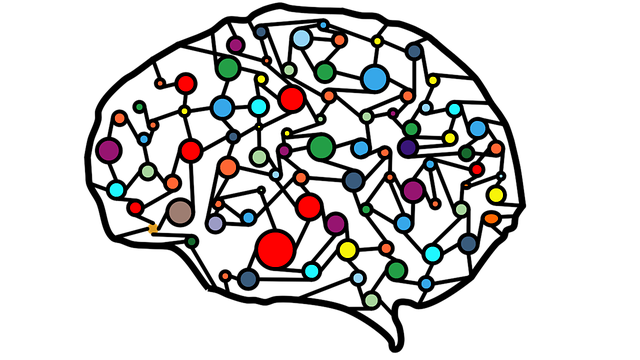
Alan Turing, often called the “father of computer science,” revolutionized the way we think about machines and intelligence. His groundbreaking work on mechanical intelligence—the idea that machines can emulate human thought processes—laid the foundation for modern artificial intelligence (AI). Turing’s contributions spanned mathematical theory, cryptographic innovation, and philosophical exploration, making him one of the most influential figures in the history of computing. This detailed article ” Mechanical Intelligence and Alan Turing:” explores Turing’s concept of mechanical intelligence, its key components, and its enduring impact on the field of AI.
Understanding Mechanical Intelligence
Mechanical intelligence refers to the ability of machines to perform tasks that typically require human intelligence, such as reasoning, problem-solving, and learning. Unlike purely mechanical devices like levers or gears, systems exhibiting mechanical intelligence operate based on logical processes and computational frameworks.
Turing’s exploration of mechanical intelligence rested on two fundamental premises:
- The Mind as a Machine: Turing viewed the human mind as a computational system governed by physical and logical laws, suggesting that it could be replicated artificially.
- Computation as a Universal Process: He proposed that any task that can be defined mathematically or algorithmically could, in principle, be performed by a machine.
These ideas were revolutionary, as they bridged the gap between abstract mathematics and the practical implementation of machines capable of “thinking.”
The Turing Machine: Theoretical Foundations
In 1936, Alan Turing introduced the concept of the Turing Machine, a theoretical construct that became the cornerstone of computational theory. This model was not a physical machine but a mathematical framework designed to formalize the principles of computation.
Key Features of the Turing Machine:
- Infinite Tape: The machine operates on a tape divided into cells, each capable of holding a symbol. The tape is theoretically infinite, allowing the machine to process unlimited data.
- Read-Write Head: A mechanical “head” moves along the tape, reading symbols, writing new ones, and erasing existing ones based on a set of rules.
- Finite State Machine: The Turing Machine operates in discrete states. Its behavior at any given moment is determined by its current state and the symbol it reads from the tape.
- Set of Rules: These are the instructions or “program” that dictate how the machine transitions between states and manipulates the tape.
Universality of the Turing Machine:
Turing demonstrated that a “Universal Turing Machine” could simulate any other Turing Machine, making it a theoretical model for all forms of computation. This universality became the foundation for modern general-purpose computers.
Impact on Mechanical Intelligence:
The Turing Machine proved that any logical process, including reasoning and problem-solving, could be reduced to a series of mechanical operations. This insight was a pivotal step toward building machines that emulate human cognition.
Wartime Contributions: Mechanical Intelligence in Action
During World War II, Turing applied his theoretical insights to practical problems, most notably in the development of the Bombe, a machine designed to break the German Enigma code. The Bombe was a precursor to modern computational devices, demonstrating the potential of machines to process complex information and perform tasks traditionally requiring human intelligence.
How the Bombe Demonstrated Mechanical Intelligence:
- Pattern Recognition: The Bombe identified patterns in intercepted messages, simulating a form of reasoning.
- Efficiency: It automated tasks that would have taken human analysts months or years to perform manually.
- Logic and Rules: The machine’s operation relied on a predefined set of logical instructions, much like modern algorithms.
While the Bombe was not intelligent in the contemporary sense, its success underscored the feasibility of machines performing sophisticated, logic-based tasks.
The Turing Test: Measuring Machine Intelligence
In his seminal 1950 paper “Computing Machinery and Intelligence,” Turing posed the now-famous question: “Can machines think?” Instead of attempting to define “thinking,” Turing proposed an operational test to evaluate machine intelligence: the Turing Test.
How the Turing Test Works:
- A human interrogator communicates with two unseen entities: a human and a machine.
- The interrogator’s goal is to determine which is which based on their responses to questions.
- If the interrogator cannot reliably distinguish the machine from the human, the machine is considered to exhibit intelligent behavior.
Philosophical Implications:
- Behavior vs. Mechanism: Turing argued that intelligence should be judged by observable behavior, not by the underlying processes.
- General Intelligence: The test implied that a truly intelligent machine would need a broad understanding of language, reasoning, and context.
While the Turing Test has faced criticism, it remains a foundational concept in AI, shaping how researchers think about machine intelligence.
Philosophical Questions Raised by Turing
Turing’s exploration of mechanical intelligence raised profound philosophical and ethical questions that continue to resonate today:
- Can Machines Truly Think?
Critics like John Searle (with his Chinese Room Argument) have argued that simulating intelligence does not equate to genuine understanding or consciousness. - What is the Nature of Intelligence?
Turing’s work blurred the line between human and machine capabilities, challenging traditional notions of intelligence as a uniquely human trait. - Ethics of Intelligent Machines:
Turing’s ideas foreshadowed modern concerns about the ethical implications of creating machines that can act autonomously or make decisions.
Legacy and Modern Applications
Turing’s work on mechanical intelligence has left an indelible mark on computing and AI. His theories underpin many of the technologies we rely on today.
Key Areas Influenced by Turing:
- Artificial Intelligence:
- Neural networks and machine learning systems are direct descendants of Turing’s vision of machines capable of self-improvement and learning.
- Cryptography:
- Modern cybersecurity systems owe much to Turing’s wartime contributions and his insights into pattern recognition and logical reasoning.
- Natural Language Processing (NLP):
- Turing’s emphasis on language in the Turing Test inspired the development of systems like GPT, capable of simulating human-like conversations.
- Theoretical Computer Science:
- Turing’s concept of the Universal Turing Machine continues to guide computational theory and the design of algorithms.
Modern Critiques and Limitations
While Turing’s ideas were revolutionary, they were not without limitations:
- Computational Power: Early systems lacked the hardware to fully realize Turing’s vision of mechanical intelligence.
- Philosophical Challenges: Questions about consciousness, understanding, and the nature of thought remain unresolved.
- Ethical Concerns: As AI systems become more advanced, the implications of Turing’s work on autonomy and decision-making grow increasingly relevant.
Conclusion: Turing’s Enduring Legacy
Alan Turing’s exploration of mechanical intelligence was a monumental step in the journey toward artificial intelligence. His theoretical insights and practical innovations laid the groundwork for modern computing and inspired generations of researchers to push the boundaries of what machines can achieve.
As we continue to develop AI systems capable of emulating human cognition, Turing’s work serves as both a guide and a reminder: the quest to understand and replicate intelligence is as much about philosophy as it is about engineering. His legacy challenges us to build machines that not only solve problems but also respect the ethical and societal dimensions of intelligence.
Further Reading and Exploration:
- The Alan Turing Institute
- Alan Turing: The Enigma by Andrew Hodges
- Explore computational theory at MIT OpenCourseWare
Turing’s vision of mechanical intelligence remains as relevant today as it was over half a century ago, continuing to shape the future of AI.
We recommend reading
Advancements in AI model evaluation
The origins of artificial intelligence